



Automatic vs. Manual Die Clamps: Which Should You Choose for Your Press or Injection Molding Line?
Automatic or manual die clamps: which should you choose for your line? It usually comes down to press size and changeover frequency: past roughly 1000 tons, an operator can no longer reach the clamp by hand, so sticking with manual positioning just adds labor cost and changeover time for no real benefit, while smaller presses with infrequent changeovers often don't need a full automatic system at all. This breakdown walks through exactly where that shift happens, and where manual positioning still makes perfect sense.
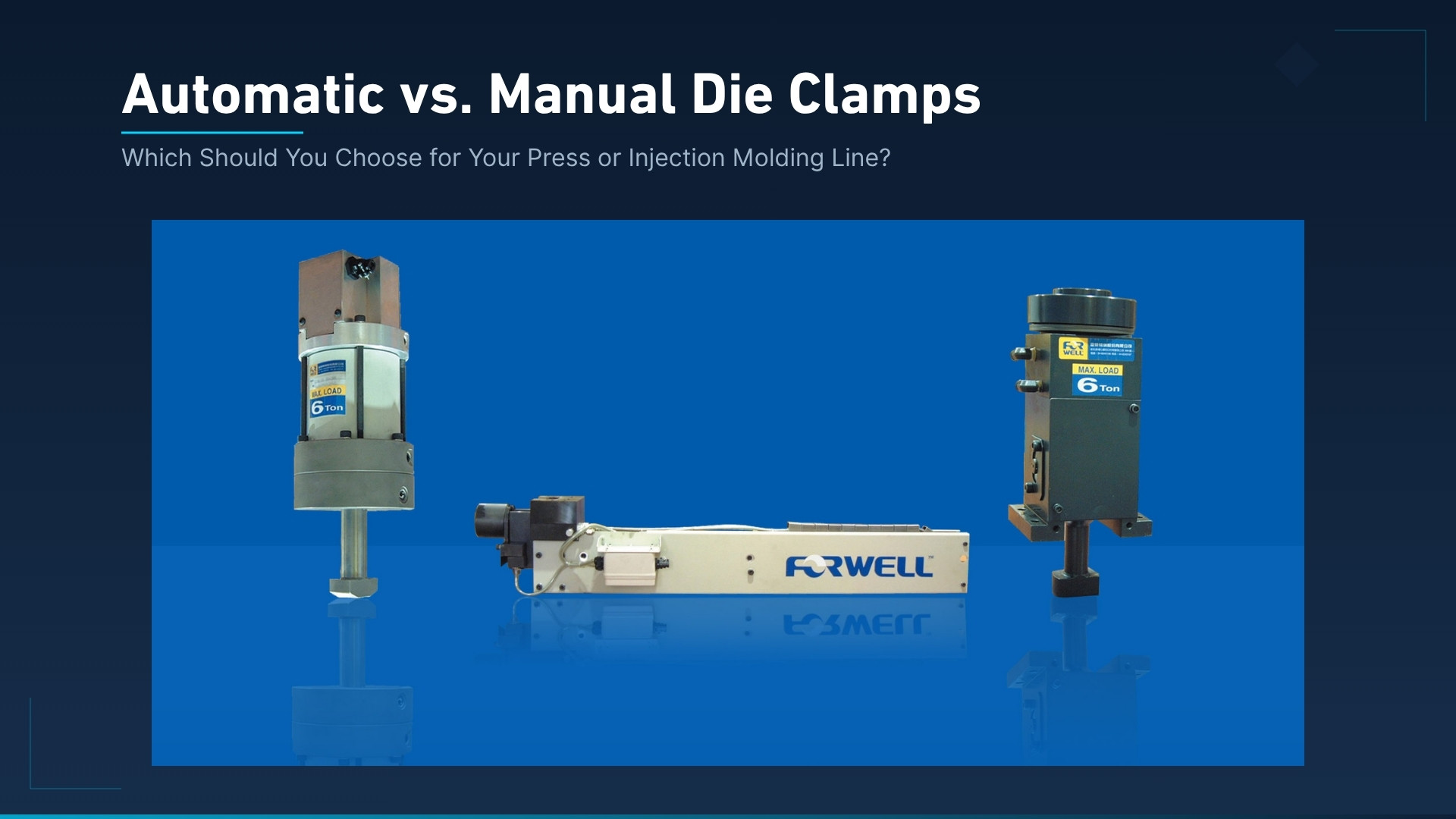
What Counts as a "Manual" Die Clamp?
Every time you change a die or mold, something has to lock it onto the press or injection molding machine before production can start. The real question is how much of that locking process needs a person standing there, and how much the machine can handle on its own.
With manual die clamps like Forwell's TY (lever-type) and TX (piston-type) die clamps, a person still does part of the job: sliding the clamp along the T-slot until it lines up with the new die, then using the control box to actually clamp it down. The clamping force itself isn't hand-tightened; it's powered, so it's the same every time, regardless of who's running the line. But someone still has to walk over, find the right spot, and get the clamp into position before the control box does anything.
That's the real distinction: not whether the clamp is hand-tightened, but whether a person has to physically position it before it can do its job. That's exactly the step a fully automatic system removes.
What Counts as an "Automatic" Die Clamp?
Forwell's Automatic Clamp System line, covering TY-C, TX-C, TAX, TR, and TS, removes that positioning step entirely. The operator controls everything from the electrical control box, and the clamp moves into position, clamps, and releases entirely on its own.
- TY-C/TX-C automatically moves the clamp forward and backward into position.
- TAX automatically clamps upper dies individually and is commonly used on large presses.
- TR rotates the clamp arm 90° and locks it securely into place. Models offer up to 16 tons of clamping force per unit (a typical 1000-ton press uses a set of multiple clamps to achieve total holding force), built for heavy-duty applications.
- TS uses a swing motion to lock dies and plates securely into position.
Based on Forwell's own field experience, the decision to move up to a fully automatic system tends to come down to one of two situations: the press is large enough (commonly 1000 tons and up) that an operator can't easily reach the clamp to position it by hand, or the customer has the budget and wants to reduce the manual labor involved in every changeover. Removing that manual step changes more than just who does the work, though.
Each model builds in position checks and safety protection rather than relying purely on an operator's judgment: TAX uses proximity switches to confirm die detection and movement, while TS uses industrial-grade microswitches for position signals.
For especially heavy dies, positioning often calls in a die lifter to help bear the load before the clamp ever engages — see Forwell's guide to die lifters for stamping for how that piece of the process works alongside a clamp system.
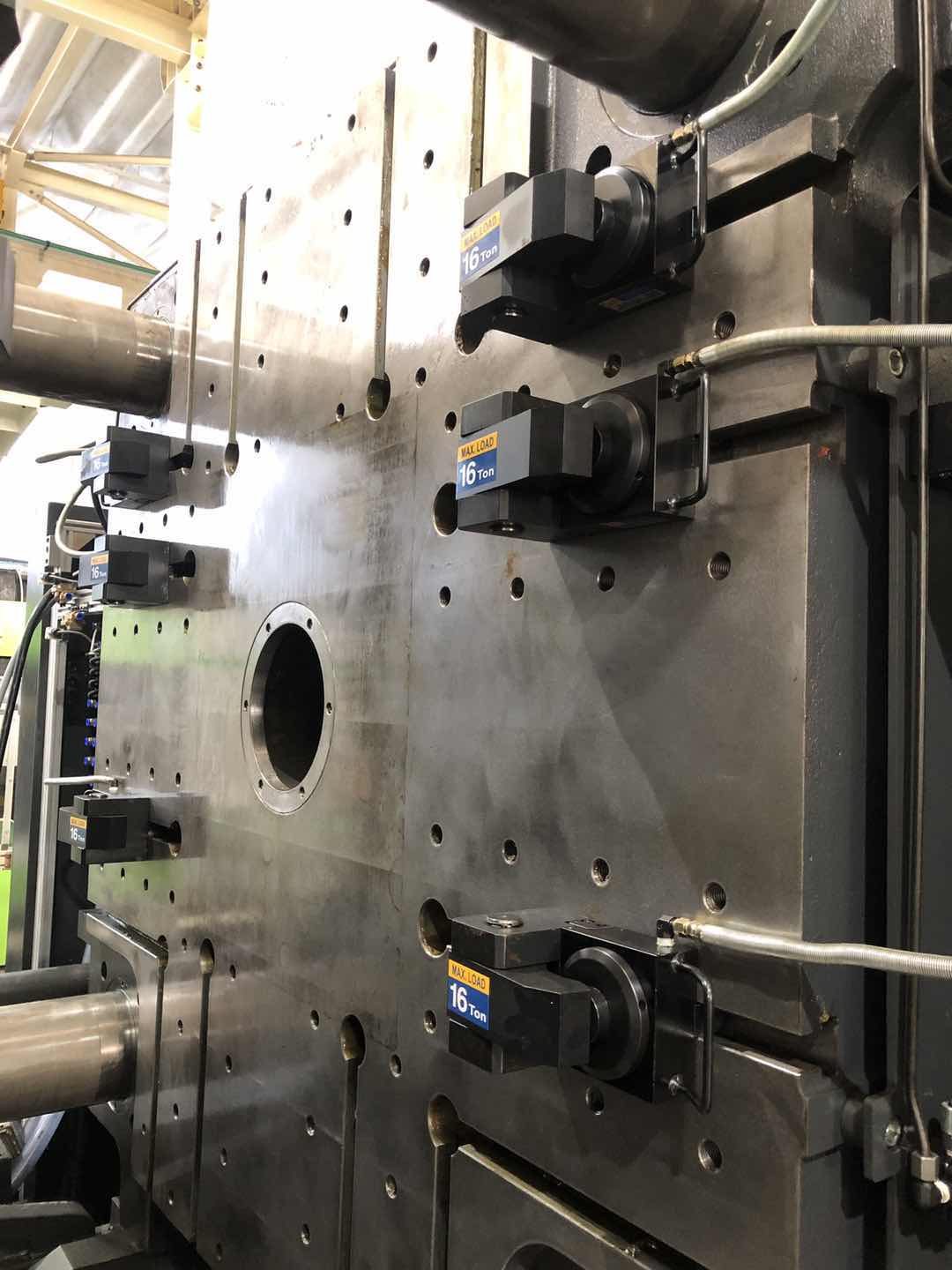
(Forwell's Manual clamps (16-ton rated) installed on an injection molding machine's mold plate)
Manual vs Automatic — What Actually Changes on Your Line
The clearest, most consistent difference between the two comes down to who handles positioning. With TY/TX, positioning is a manual step every changeover. With automatic models (TY-C/TX-C/TAX/TR/TS), the system handles it entirely. This is precisely why press size becomes the deciding factor—above 1,000 tons, clamps are simply out of reach, making manual positioning impractical.
In terms of changeover time, field data shows that switching from traditional bolted die mounting to a manually positioned die clamp (TY/TX) roughly halves setup time. Moving from manual positioning to a fully automatic system halves it again. In other words, upgrading from traditional bolting to full automation can reduce changeover time to a quarter of the original—achieved in two logical steps rather than one risky leap.
To put that into concrete terms: suppose your line runs 3 changeovers a day, with each taking 40 minutes under traditional bolting. A manually positioned clamp brings that down to roughly 20 minutes, while a fully automatic system reduces it to about 10. That reclaims nearly 90 minutes of press downtime every day—close to 30 production hours a month. Beyond reducing labor reliance, this directly boosts your Overall Equipment Effectiveness (OEE) and unlocks valuable capacity on high-tonnage machinery.
In real-world operation, the clamping phase alone reveals an even bigger gap: one Forwell customer in Asia running a 2,500-ton injection molding machine previously spent 3–4 minutes just hand-tightening bolts to secure the die. With automatic clamping, that same step now takes just a few seconds.
(Watch how one Forwell customer transformed their die-changing process — real results from a real production line)
Other Ways to Automate: Electric and Magnetic Options
A newer option: TMX. Forwell's TMX is an electric-motor-driven version of TAX — roughly half the body height, a longer stroke (up to 2000mm versus TAX's 1300mm), and it works on both upper and lower dies where TAX is upper-die only. Worth a mention if an electric-driven clamp fits your setup better than a standard clamp system.
What about magnetic clamping? For a different approach entirely — clamping without any mechanical clamp at all — Forwell also offers integrated Magnetic Quick Mold Change Systems (MQCS), which hold the mold in place directly through electro-permanent magnetic force, eliminating mechanical clamp positioning entirely for ultra-fast changeovers.
When Manual Still Makes Sense
None of this makes automatic clamping the default recommendation. On smaller presses with infrequent changeovers, and for customers working within a tighter budget, a manually positioned die clamp remains the right call, since the access and labor-cost pressures that justify automatic clamping aren't there yet. So how do you tell where your own operation falls?
How to Decide Between Manual and Automatic Die Clamps
Before you get into specific models, a few questions settle most of the decision: how large is your press, do you want full automation or is manual positioning acceptable, what's your budget range, and how standardized are your die dimensions. Reachability becomes a hard constraint above roughly 1000 tons, and automatic systems get the most value when dies share consistent mounting positions and clamping heights, since that consistency is what lets the clamp position itself the same way every time; highly varied, one-off die designs get less benefit from full automation.
| Manual — TY / TX | Automatic — TY-C / TX-C / TAX / TR / TS | |
|---|---|---|
| Positioning | Operator moves the clamp into place by hand | Clamp positions itself via the control box |
| Clamp / release action | Powered, triggered from the control box | Powered, triggered from the control box |
| Typical press size | Below roughly 1000 tons | Roughly 1000 tons and up, where the clamp is hard to reach by hand |
| Die standardization | Not required — clamp is positioned by hand each time | Works best when die mounting dimensions are consistent across your die sets |
| Best fit for | Infrequent changeovers, tighter budget | Frequent changeovers, budget for reducing labor |
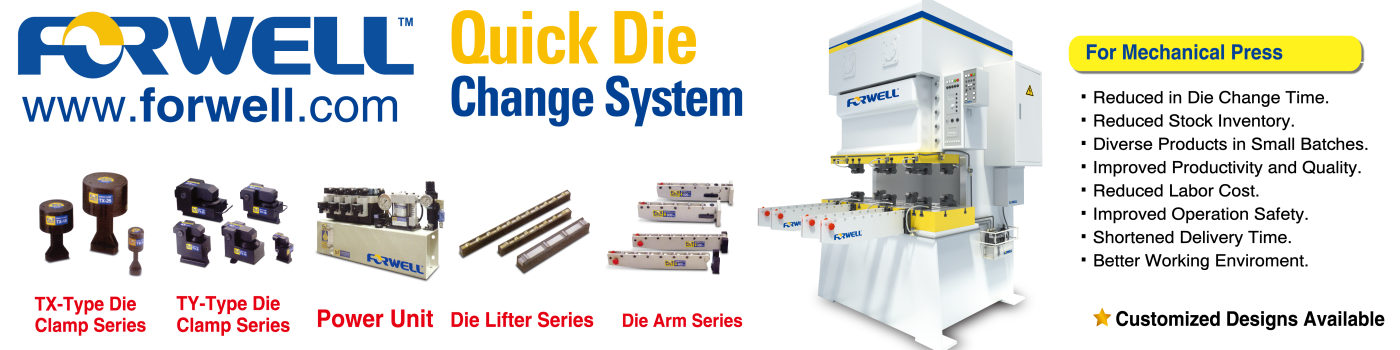
(Forwell's Quick Die Change System — built around a full lineup of die clamps, power units, die lifters, and die arms)
FAQ: Automatic vs Manual Die Clamps
A few more specific questions tend to come up once you've worked through the table above:
Q1 : Do Forwell's manual die clamps rely on hand-tightened bolts?
No. Forwell's TY and TX manual die clamps engage and release via a control box, the same as an automatic system. What's manual is only the positioning step: the operator moves the clamp into place by hand before triggering it.
Q2 : What press size typically needs an automatic clamp system?
Commonly around 1000 tons and up, once an operator can no longer easily reach the clamp to position it by hand. Budget for reducing labor is the other common reason customers move up to automatic.
Q3 : How long do Forwell's clamps typically last?
With reasonable operating practices, more than 10 years of service life is common.
Q4 : How much faster is automatic clamping than traditional bolted die mounting?
Roughly a quarter of the original time, reached in two separate steps: moving to a manually positioned die clamp (TY/TX) roughly halves changeover time versus traditional bolting, and moving to a fully automatic system (TY-C/TX-C/TAX/TR/TS) roughly halves it again.
Q5 : Can Forwell's automatic clamp systems be retrofitted onto an existing press?
In most cases, yes. Forwell's automatic clamp systems are designed to mount onto standard bolster T-slot configurations. Since exact mounting dimensions vary by press, confirm your press's specifications with Forwell's engineering team before ordering.
Q6 : Is manual die clamping still a good choice?
Yes. For smaller presses with infrequent changeovers, or for customers working within a tighter budget, a manually positioned die clamp remains the right call.
Get a Recommendation for Your Line
The right model (TY or TX for manual, TY-C, TX-C, TAX, TR, or TS for automatic) depends on your environment and tonnage, and it's a quick conversation with Forwell's engineering team away. Forwell has been building quick die and mold change systems since 1987, with facilities in Taiwan and Huaian, China, plus Ningbo and Shenzhen offices, and holds ISO 9001 (International Organization for Standardization) and CE (Conformité Européenne) certification. Contact Forwell with your press tonnage, changeover frequency, and environment, and an engineer can confirm the right clamp for your line.
For a broader look at mold clamping systems beyond automatic vs manual, including magnetic clamping, see Forwell's complete guide to mold clamping systems. For buying-guide factors beyond clamp type — system durability, maintenance, and post-sale support, plus a real-world case study — see Forwell's detailed look into Quick Mold Change Systems. And if unmanned material transport is part of your automation plans, Forwell has also recently introduced AGV-based die and mold transport for fully unmanned production lines.
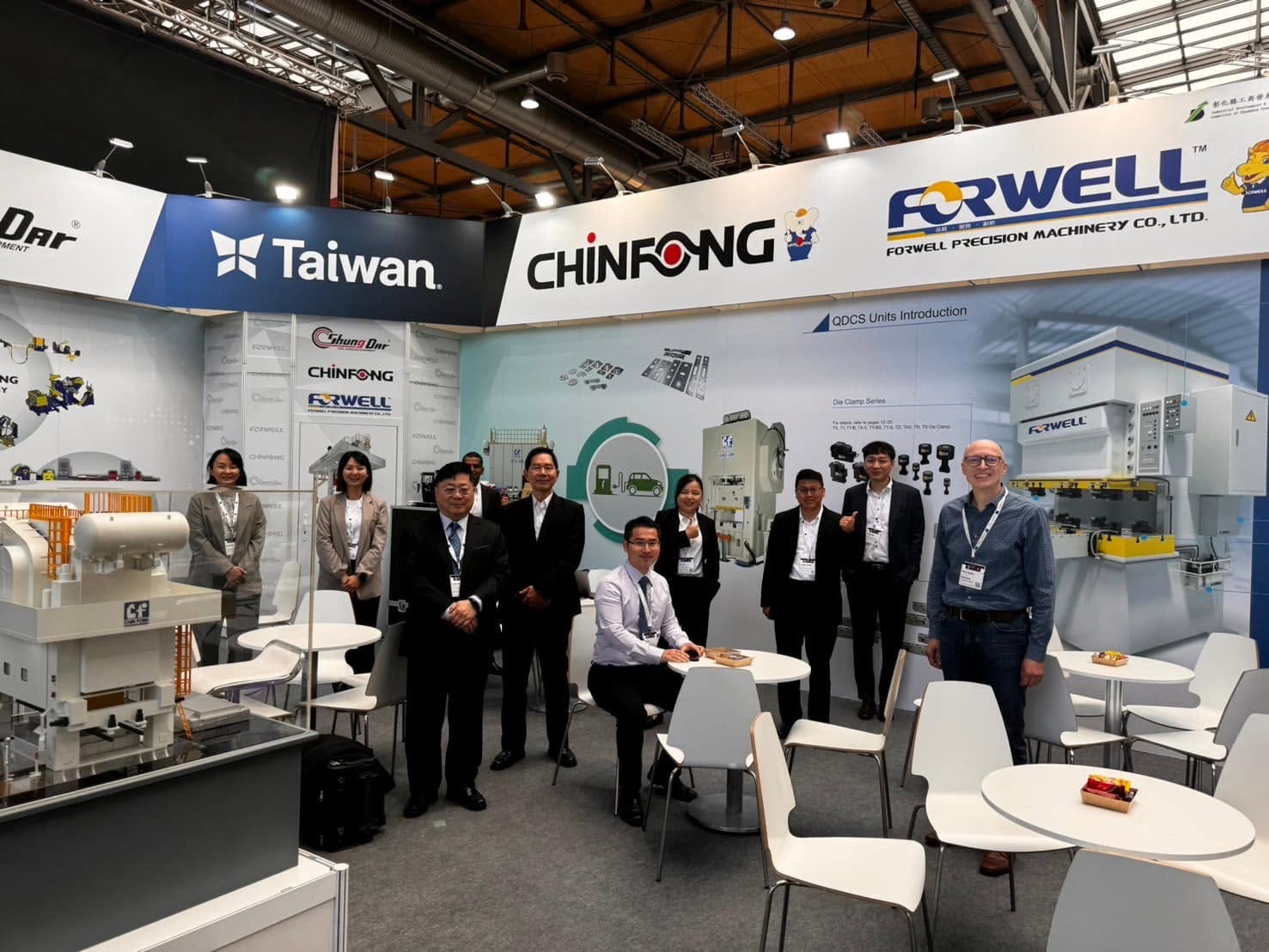
(Forwell at an international trade show, exhibiting its Quick Die Change System)
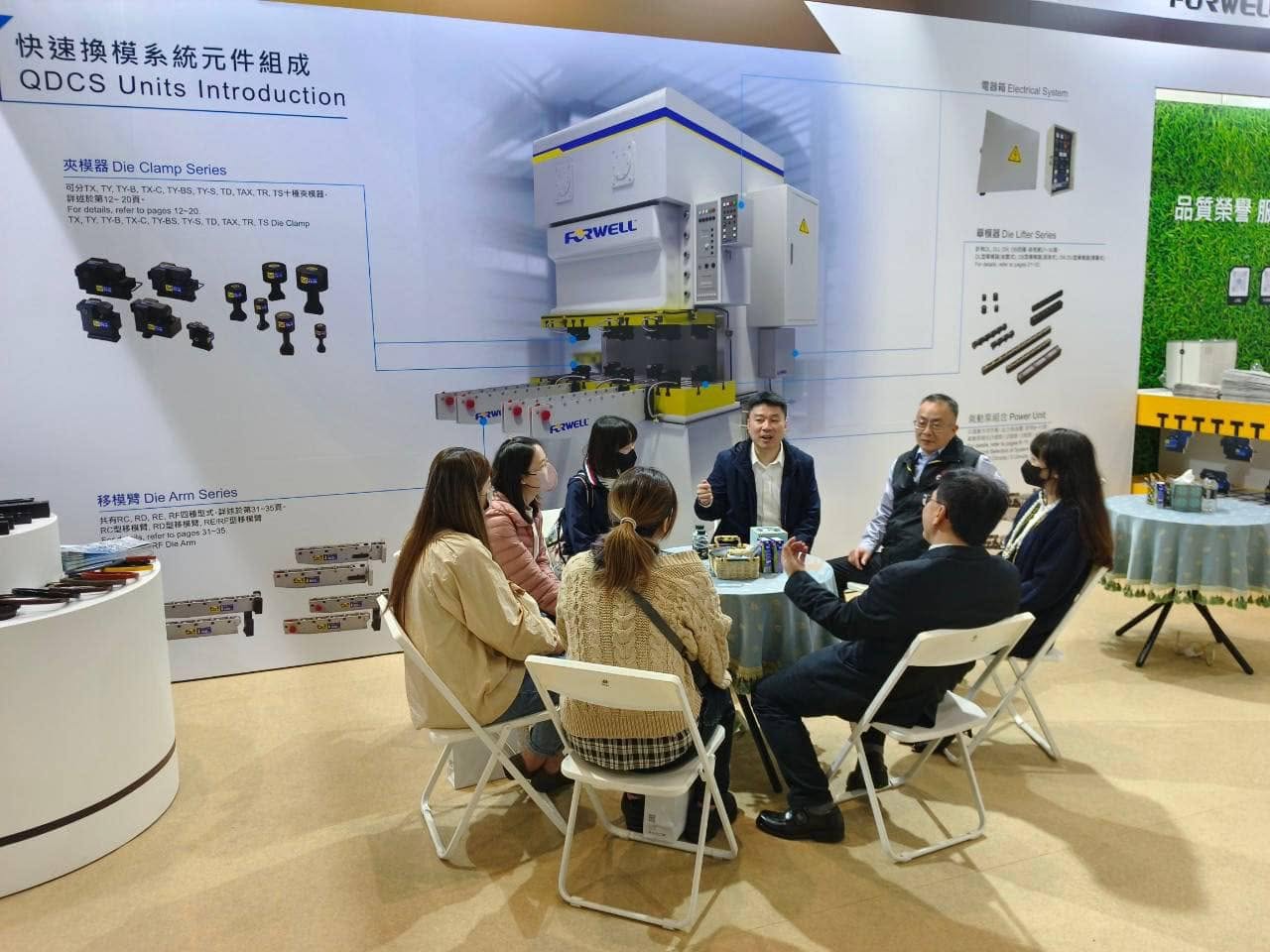
(A closer look at Forwell's Quick Die Change System lineup — die clamps, die arms, and power units — as the team walks visiting customers through the product range)
Previous page